
September marks China's National Science Popularization Month. On 20 September, the Voice of China Association for Science and Technology (CAST) published an interview with Sio Hon Pan, Curator of the Macao Science Center and a delegate to the 11th National Congress of CAST, in its "Dialogue" column. The interview is part of a series on studying the Congress's guiding principles. Starting from a science museum printed on a banknote, it introduces how the Macao Science Center cultivates public scientific literacy and builds bridges for science popularization. HKSPSF has long maintained science popularization exchanges with the Macao Science Center, and the main contents of the interview are summarised below.
Sio Hon Pan has long been committed to promoting science popularization exchanges in the Guangdong-Hong Kong-Macao Greater Bay Area, advancing science education and scientific literacy among young people. He is a recipient of the National Innovation Pioneer Award.
A Science Museum Printed on a Banknote
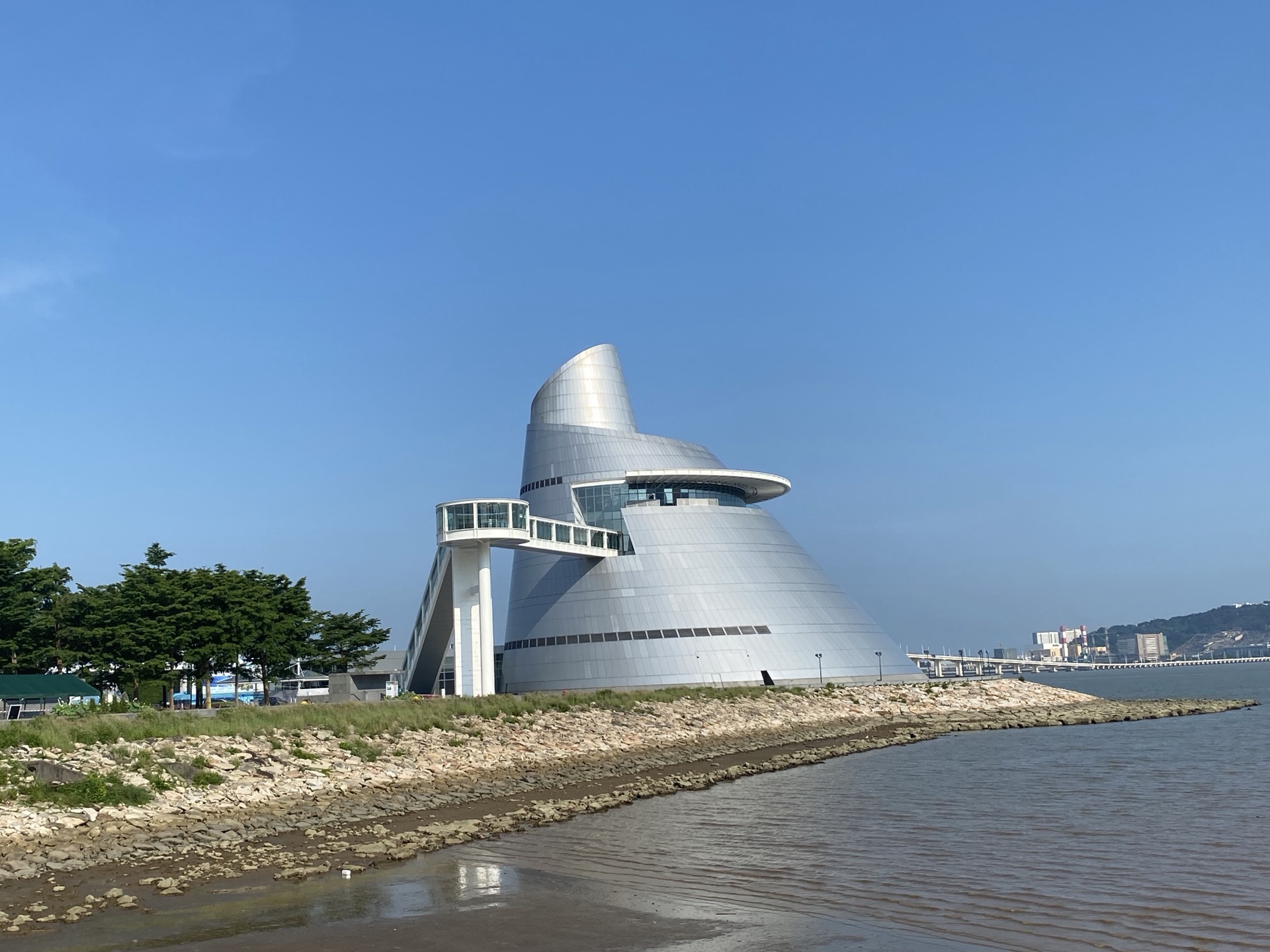
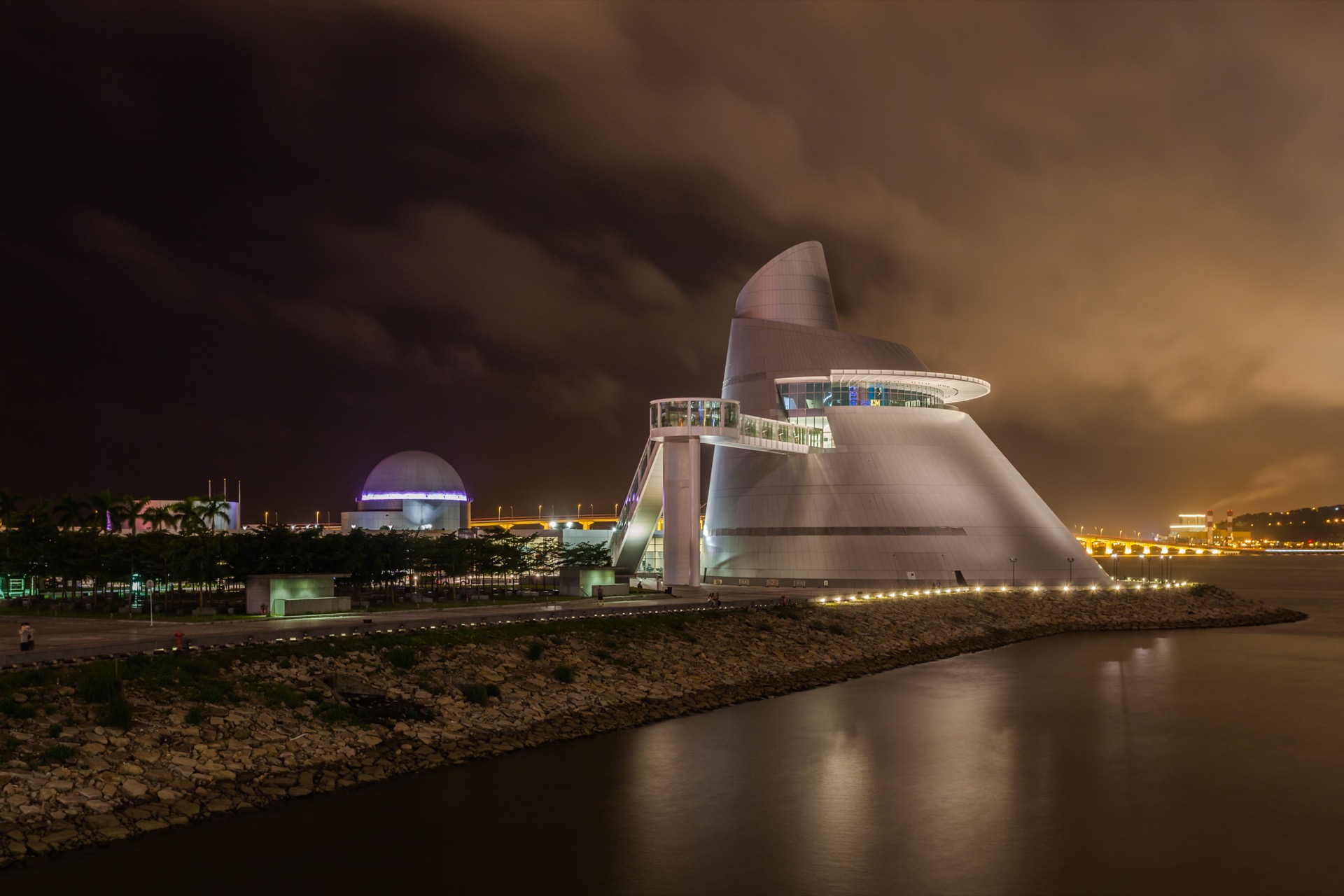
On Macao's latest 20 pataca banknote, what appears is not a historical monument but a science museum. "The Macao Science Center is the first science museum in the world to be printed on a circulating banknote," Sio said, adding that the building itself is one of the museum's signature treasures.
Designed by architect I.M. Pei, the museum sits at the southeastern tip of the Macao Peninsula, with a gross floor area of about 20,000 square metres across three components: an exhibition centre, a planetarium and a convention centre. Pei was known as a "magician of geometry" whose buildings can be expressed in mathematical formulas. In the case of the Macao Science Center, the entire volume can be described with nine geometric equations.
Another signature exhibit is the actual spacesuit of Yang Liwei, China's first astronaut in space. Donated to the museum at its opening, it is now displayed in Exhibition Hall 1. The museum's planetarium is certified by Guinness World Records as the world's highest-resolution 3D planetarium. Its tilted hemispherical screen, about 15.24 metres in diameter, forms the world's first digital dome projection system with both 8K and 3D capability. Wearing special glasses, audiences can watch stereoscopic images projected onto the giant dome.
A Bridge Connecting China and the World
"The Macao Science Center is both part of the national science popularization system and internationally oriented," Sio said, describing this bridging role as a concrete expression of the "One Country, Two Systems" advantage in science popularization.
The museum's International Laboratory for Science Popularization of the BeiDou Navigation Satellite System carries a special mission: presenting BeiDou in Portuguese. The museum plans to introduce China's BeiDou system to Portuguese-speaking countries and has completed training the first group of Portuguese-speaking BeiDou instructors. It also plans to present more of China's leading scientific and technological achievements to other countries and regions after localising them in Portuguese in Macao.
In Sio's view, Macao can serve as a "pilot platform" for mainland technology companies going global: before entering overseas markets, companies can first align with international standards and complete validation in Macao. The museum can also act as an "international meeting lounge", hosting conferences that bring together mainland and international experts to explore paths for industry, academia and research collaboration.
Deep Integration into the National Science Popularization System
Cooperation between the Macao Science Center and the mainland began on its opening day: its first temporary exhibition was a show on ancient Chinese science and technology co-organised with the China Science and Technology Museum. Around the 25th anniversary of Macao's return to China, CAST organised the "Scientist Spirit Shines over Macao" series of events in Macao and jointly launched the "Stars over China: Innovation for the Future" exhibition series with the museum, showcasing the efforts and achievements of Chinese science and technology workers since the founding of the People's Republic.
In 2022, the Macao Science Center was designated a National Science Popularization Education Base and a Scientist Spirit Education Base, making it the only science and technology venue in Hong Kong and Macao to hold both titles. At the end of that year, it joined the China Science, Technology and Culture Venues Consortium, and in 2023 it was recognised as an application demonstration base under the National Key R&D Program of the Ministry of Science and Technology. In 2027, the museum will co-host a major exhibition on Chinese bridges with the China Science and Technology Museum. It is also working with institutions including the Palace Museum and the Shanghai Science and Technology Museum on culture and technology integration, science education and research collaboration.
Science Popularization for All: Leaving No One Behind in the AI Era
"Our principle is to leave no one behind in the AI era," Sio said. This whole-population approach is reflected in programmes tailored to different age groups.
For students, Macao's Education and Youth Development Bureau, the Macao Science Center and the Urban Planning and Construction Bureau of the Guangdong-Macao In-Depth Cooperation Zone in Hengqin jointly run a student science and technology education programme, organising inquiry-based activities aligned with school curricula, with emphasis on AI literacy and interdisciplinary application skills. For senior citizens, the museum and partner organisations launched the "Smart Silver Age, Technology Companion" education programme, using a venue, community and enterprise model to help older people make good use of online technology, improve their ability to recognise and apply AI, and strengthen their awareness of network and data security. In addition, the Youth Science and Technology Village programme initiated by Sio selects about 100 Macao students each year for hands-on science popularization practice, nurturing young science and technology talent.
Looking Ahead: Contributing Macao's Part to a Science and Technology Power
As a delegate to the 11th National Congress of CAST, Sio has a clear plan for the next five years: first, nurturing future talent; second, raising public scientific literacy; third, deeply integrating technological innovation with the science and technology industry. He noted that as Macao develops diverse industries, it needs a deep understanding of the country's industrial direction and of Macao's role in the Greater Bay Area, leveraging the "One Country, Two Systems" advantage and its position as a precise link to Portuguese-speaking countries.
The interview also noted that CAST and the Macao SAR government have signed a framework cooperation agreement and set up a science and technology exchange and cooperation committee, of which Sio is a member. The committee's annual meetings cover more than 50 projects, and the Macao Science Center is responsible for many of those in science popularization. "We must not forget that our motherland is our backing. We must integrate into the country's overall development," Sio said, expressing hope that Macao will play its part in building the country into a science and technology power. He added that the Macao Science Center will continue to follow the national strategy of invigorating the country through science and education, in step with the SAR government's integrated approach to technology, education and talent development.
HKSPSF's exchanges with the Macao Science Center date back years. In June 2023, HKSPSF and the Science Fiction Foundation visited the Macao Science Center and the Base for Primary and Secondary Science and Technology Practice at the University of Macau to discuss Greater Bay Area cooperation in science popularization and science fiction (see earlier report). In April 2024, Mok Ian Ian, Chairman of Macao Science Center Limited, joined a roundtable at the Beijing-Hong Kong-Macao Science Fiction Integration Forum organised by HKSPSF and presented the museum's science popularization work (see event recap). In 2026, HKSPSF and the Macao Science Center were both supporting organisations of the first National Deep Space Cultural and Creative Works Promotion Event (see event recap).
From a building printed on a banknote to science popularization reaching Portuguese-speaking countries, the Macao Science Center offers a useful reference for science education in the Greater Bay Area. HKSPSF will continue to work with partners in Hong Kong, Macao and the mainland to advance science popularization and science fiction education for young people.
This article is adapted from an interview published by the Voice of CAST in its "Dialogue" column (read the original, in Chinese). Cover and body photos: Wikimedia Commons.