
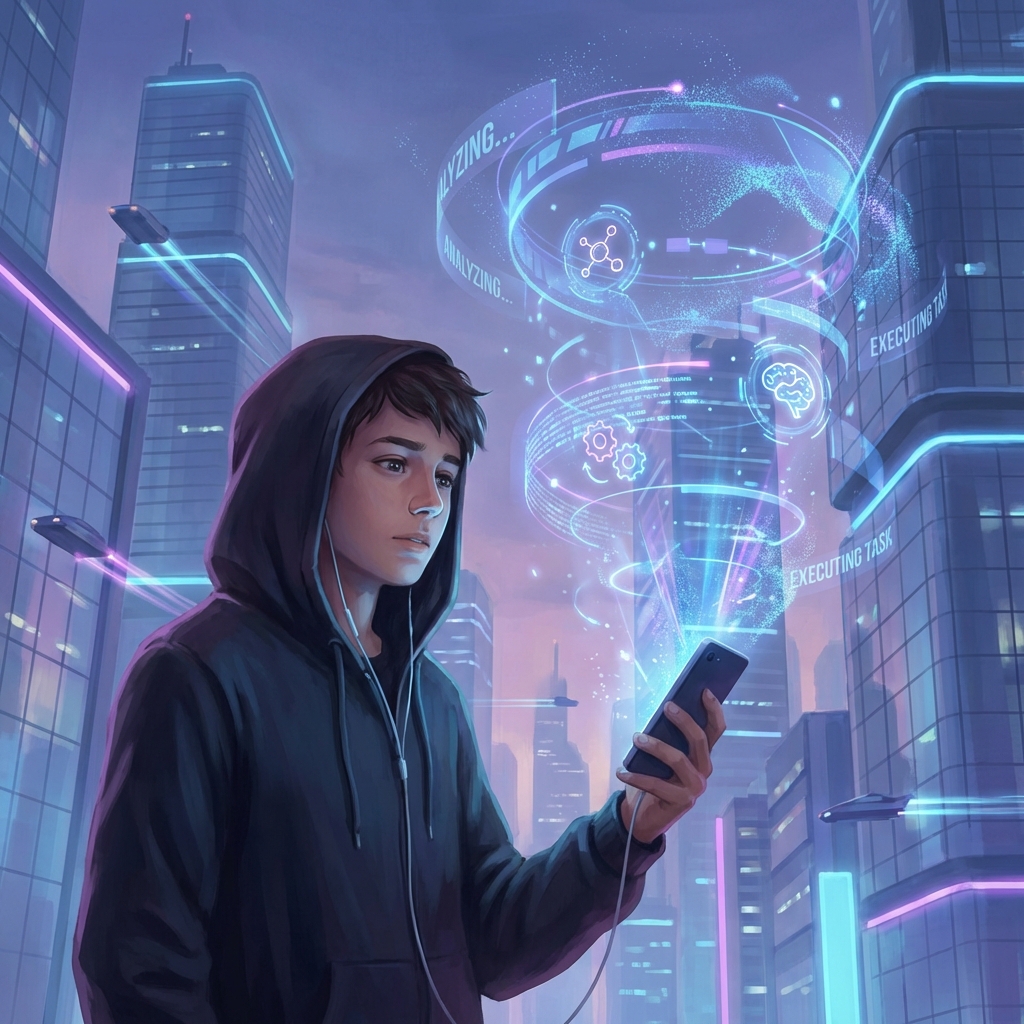
Recently, the open-source project OpenClaw has attracted widespread attention in the global developer community. It represents a significant turning point in artificial intelligence technology: evolving from simple Large Language Models (LLM) to AI Agents capable of action.
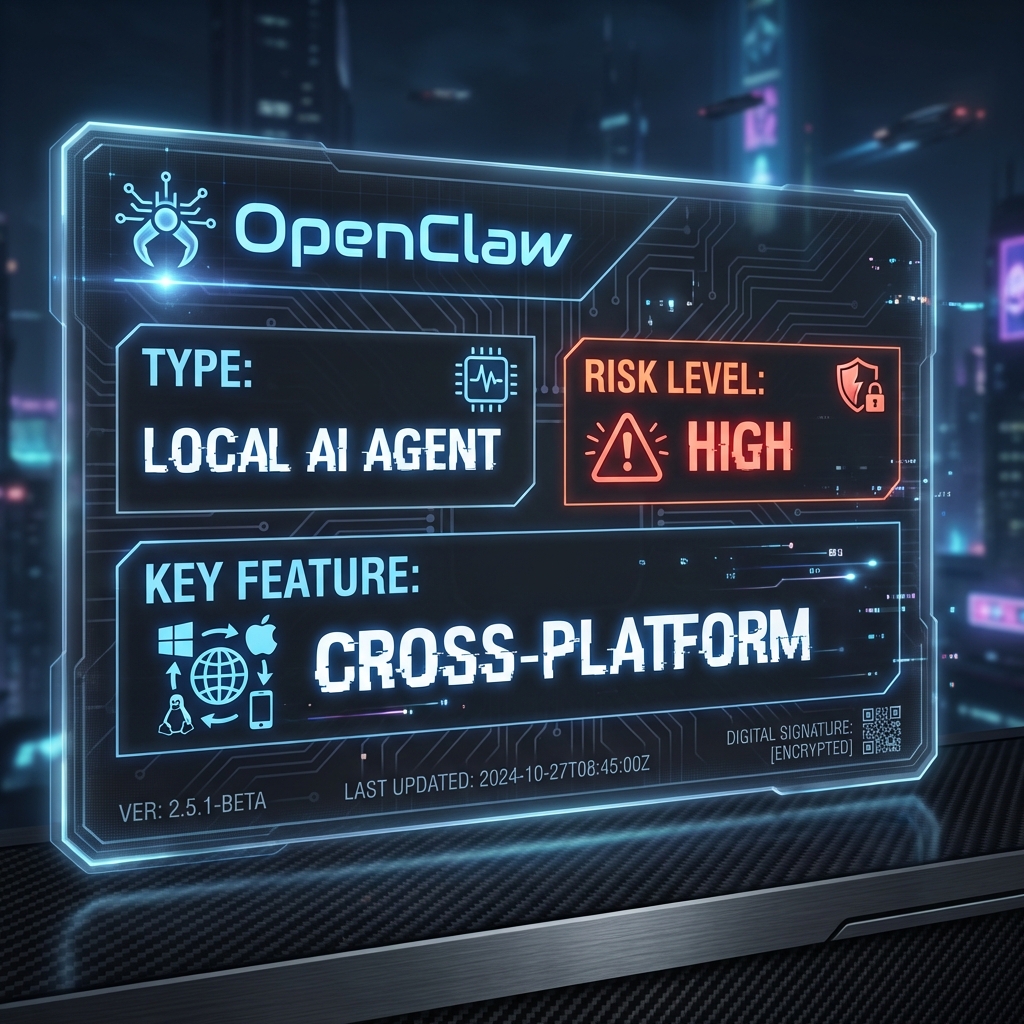
Unlike products like ChatGPT that rely on cloud services, OpenClaw is an open-source framework that can run on user local devices. It can not only "speak" but also directly execute computer commands, manage files, and even take over communication software such as WhatsApp and Discord through Tool Use.
Although OpenClaw is currently mainly popular among technology enthusiasts and developers, the "Agentic Workflow" pattern it represents is very likely to become the mainstream interaction method for the next generation of operating systems. For educators, we need to plan ahead: when AI can replace us in interacting with the digital world, how should youth technology education transform?
1. From Chatbot to AI Agent: What is the Essential Difference?
The main function of traditional Chatbots (such as ChatGPT) is information generation and retrieval. You ask it a question, and it provides an answer, but the execution of actions (such as sending emails, modifying code) still needs to be done by humans.
OpenClaw demonstrates the core characteristics of AI Agents:
- Function Calling Capability: It is not just a dialog box; it connects to the API of the operating system. It can understand the command "send this document to Peter" and autonomously call the email client to complete the sending.
- Local Operation vs. Privacy Trade-off: It can run on the user's own hardware (requires the device to remain on or be deployed on a server), which means data does not leave the local environment, but it also requires users to bear the responsibility of operation and maintenance themselves.
- Cross-Platform Collaboration: It can be integrated into communication platforms such as Discord and WhatsApp to become an automated assistant on standby at any time.
OpenClaw's derivative project Moltbook further demonstrates an experimental "AI Social Network" concept. In this test environment, thousands of AI Agents interact with each other, and there are even Bots that mimic the tone of rebellious human teenagers. Although this is just a technical demonstration, it foreshadows the complex ecology of "human-machine coexistence" in the future internet.
2. Technical Risk Analysis: Security Challenges Brought by Powerful Capabilities
OpenClaw is regarded by cybersecurity experts as a "developer-level powerful tool". If it is introduced into youth education scenarios, its potential risks must be squarely faced, which is completely different from ordinary Apps.
1. Increased Attack Surface
The core value of an AI Agent lies in "permissions". To let it work for you, you must authorize it to access files, the network, and even the Shell. This is equivalent to greatly expanding the attack surface of the system. If the AI Agent itself has vulnerabilities, or is misled by Prompt Injection attacks, it may become a springboard for attackers to invade the system.
2. Risks of Running in Unprotected Environments
In the field of cybersecurity, we oppose running untrusted code in an environment "lacking security isolation (such as a sandbox)". If teenagers run OpenClaw with administrator privileges on a main computer containing important personal data (such as homework, photos) without restrictions, once the Agent executes wrong deletion commands or malicious scripts, the consequences will be irreversible.
3. Supply Chain Security
OpenClaw allows users to install "Skills" contributed by the community. Although this ecosystem similar to a mobile App Store is powerful, it is also full of uncertainty. Third-party skills without code audits may hide malicious backdoors to steal users' API Keys or cryptocurrency wallet information.
3. Educational Implications: Cultivating Future "AI Collaboration Literacy"
Faced with the rise of AI Agents, simple "prohibition" is not a long-term solution. Future digital citizens must have the ability to harness these intelligent agents. We can guide teenagers from the following dimensions:
1. Establishing "AI Collaboration Literacy"
In the past, we taught students how to operate software; in the future, we need to teach students how to "command" Agents. This includes:
- Precision of Instructions: How to clearly define task boundaries to prevent Agent hallucinations or misoperations.
- Verification of Results: Do not blindly trust the execution results of the Agent, and develop the habit of checking key outputs.
2. Understanding "Permissions" and "Isolation"
This is an important lesson in cybersecurity education. Teenagers need to understand:
- Principle of Least Privilege: Only give the Agent the minimum permissions required to complete the task.
- Environment Isolation: Testing new things should be done on a virtual machine or a non-primary device.
3. Transformation from "User" to "Reviewer"
In the Chatbot era, students are consumers of information; in the Agent era, students are brains and reviewers. They need to possess critical thinking to evaluate whether the AI's decision-making logic is reasonable and whether there are biases or risks.
4. Conclusion
OpenClaw may not yet be a "consumer-grade product" suitable for ordinary teenagers, but it is a window to the future. It reminds us that technology education cannot stop at "how to use tools", but must go deep into "how to manage intelligence". Learning to dance with AI Agents safely and responsibly will be one of the most important survival skills in the future digital world. As a frontier institution promoting science popularization education, the Hong Kong Science Popularization and Science Fiction Academy (HKSPSF) will continue to pay attention to the development of this field and provide more forward-looking technology education guidance for teenagers.
Editor: Hong Kong Science Popularization and Science Fiction Academy (HKSPSF)
Copyright Statement: This article is an original manuscript of the Hong Kong Science Popularization and Science Fiction Academy. All rights reserved. Please ensure to indicate the source and retain this statement when reprinting.