
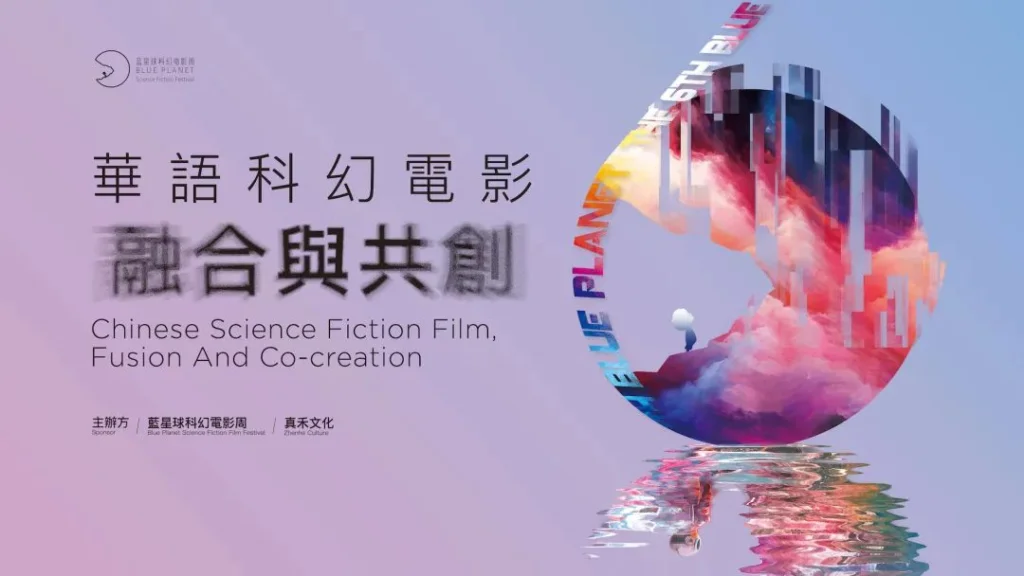
On the afternoon of March 13, from 3 to 5 pm, the forum "Chinese Sci-Fi Films · Fusion and Co-creation", hosted by the Blue Planet Science Fiction Film Festival and Zhenhe Culture, was successfully held at the Hong Kong International Film & TV Market (FILMART), discussing the diversified development of Chinese sci-fi films with an international vision and an open attitude.
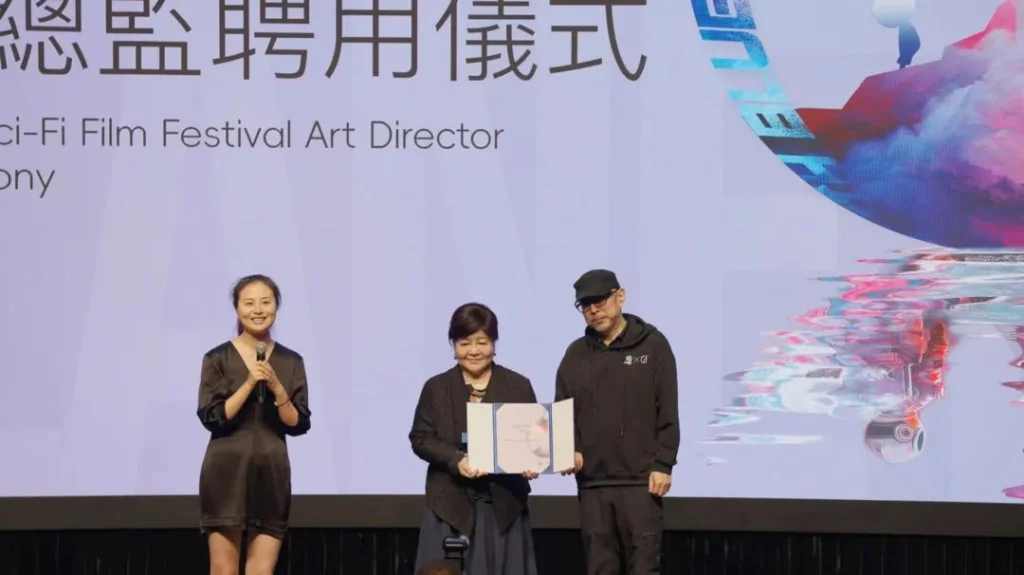
At the event, Peggy Chiao was formally appointed as the Art Director of the 6th Blue Planet Science Fiction Film Festival, and the global call for entries for the main competition unit of the 6th Sci-Fi Film Festival was officially launched.
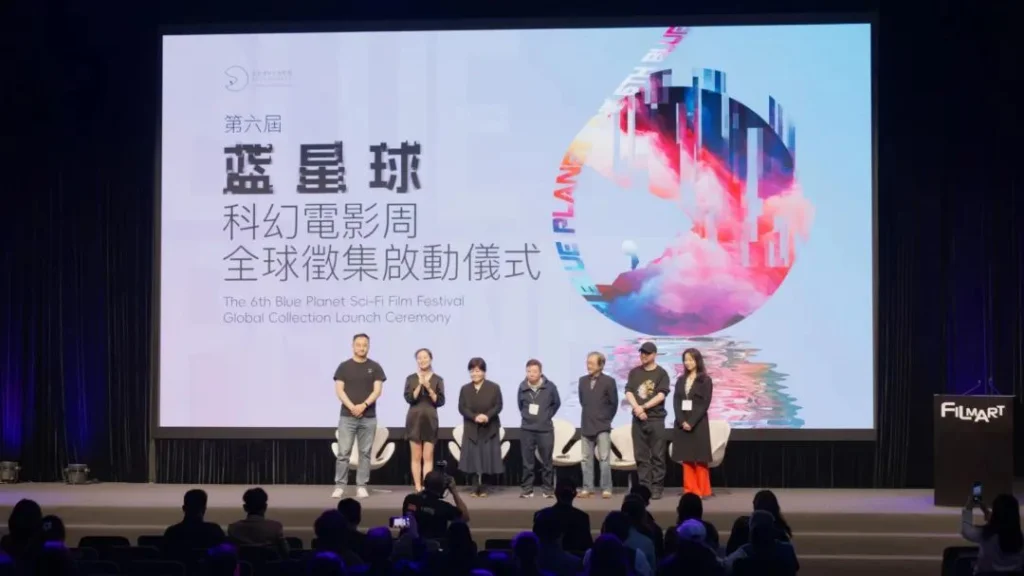
At the forum, Wang Hongwei, Chairman of the Blue Planet Science Fiction Film Festival, sorted out the characteristics and future trends of sci-fi films from the market performance and genre classification of mainland Chinese sci-fi films in the past 5 years; Peggy Chiao, Art Director of the Blue Planet Science Fiction Film Festival, summarized the expression direction of local creation from the development path of sci-fi films in the international market; the roundtable forum revolved around the localized expression of sci-fi films in Hong Kong and the Mainland. Guests including Hong Kong director and screenwriter Manfred Wong, Hong Kong film scholar Sam Ho, and sci-fi film director and producer Yu Gang conducted enthusiastic discussions and sharing.
Wang Hongwei
Since "Year One" — Five Years of Mainland Chinese Sci-Fi Films
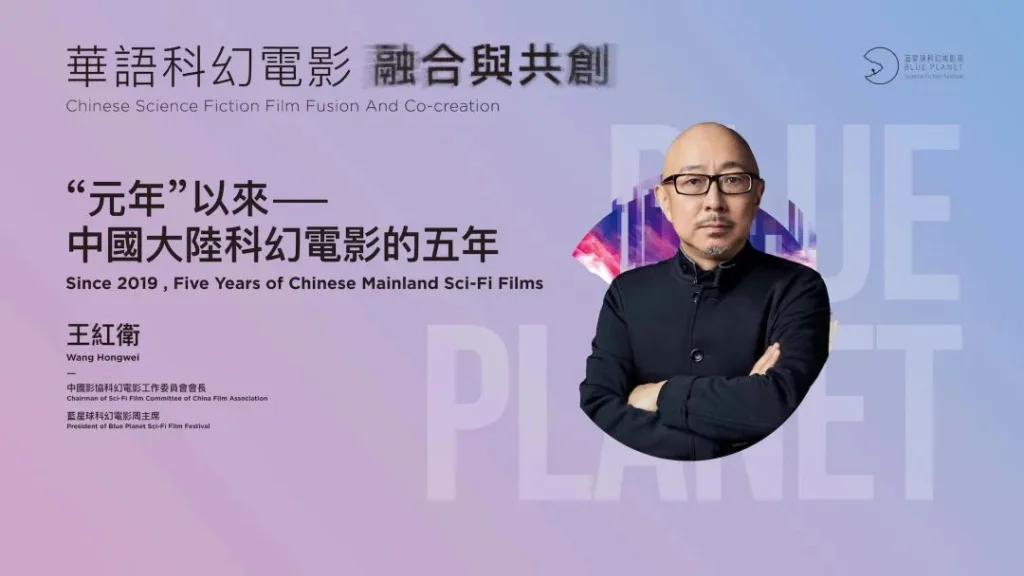
Chairman of the Science Fiction Film Working Committee of the China Film Association
Chairman of the Blue Planet Science Fiction Film Festival
Professor Wang Hongwei threw a question at the beginning: "Since the 'Year One' of Chinese sci-fi films in 2019, how many sci-fi films invested or produced mainly by the Mainland have been released in Mainland cinemas until now?" He counted and introduced that as of February this year, there were 27 sci-fi themed films released in cinemas in the past 5 years or so. Among them, animated films accounted for 1/3. Sci-fi film creators have a consensus — in films for children, sci-fi is a breakthrough point. In addition, among the 27 films, hard sci-fi is very rare, and other films show diversity, but not many can truly withstand the test of the market.
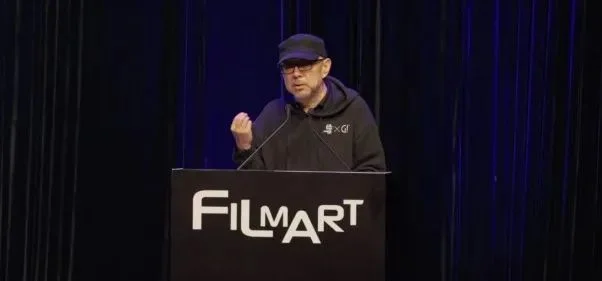
Professor Wang Hongwei mentioned that the characteristic of sci-fi films is that they inevitably add another genre under the label of sci-fi. Currently, the integration of sci-fi films and genre films is far from enough.
In addition, he believes that what restricts the production capacity of Chinese sci-fi films is neither investment nor the market, but talents! This is also the original intention of Professor Wang Hongwei serving as the Chairman of the Blue Planet Science Fiction Film Festival and deeply participating in talent training projects such as the Blue Planet Venture Capital, looking forward to accompanying the growth of young Chinese sci-fi filmmakers with the Blue Planet.
Peggy Chiao
Sci-Fi Films and the Chinese Future Tense
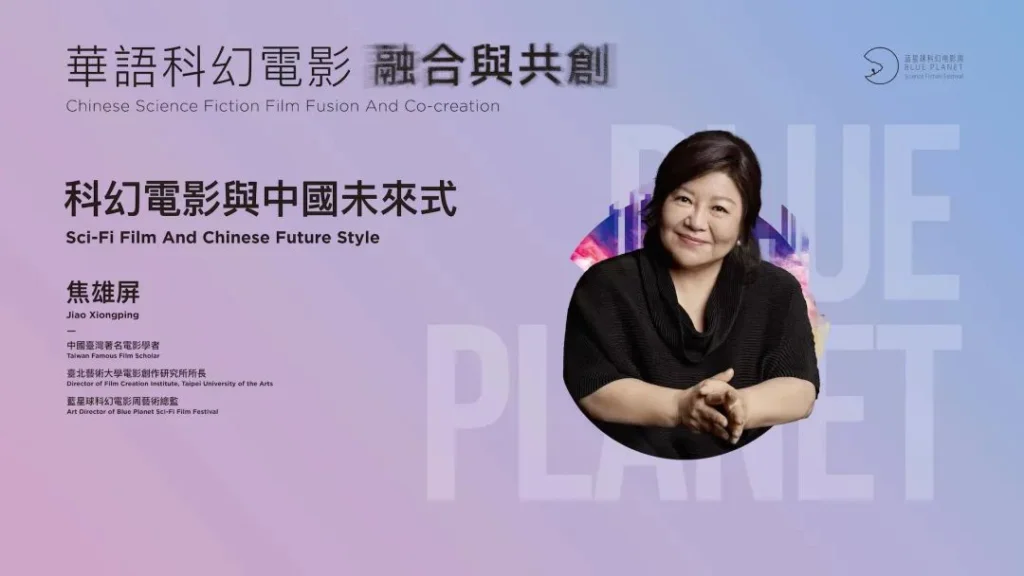
Famous Film Scholar in Taiwan, China
Director of the Graduate Institute of Filmmaking, Taipei National University of the Arts
Art Director of the Blue Planet Science Fiction Film Festival
Professor Peggy Chiao is an important promoter of the internationalization of Chinese films. As a senior film scholar and sci-fi fan, she has done considerable research on the history of international sci-fi films. Professor Chiao introduced the development context of sci-fi films in countries such as the United States and Japan, as well as the echo between the development of sci-fi films in various countries and national technological development and social forms.
Based on the analysis of the development laws of foreign sci-fi films over decades, Professor Chiao believes: "Whether Chinese films have grasped the sense of resonance and the collective social subconscious since the first year is an important topic."
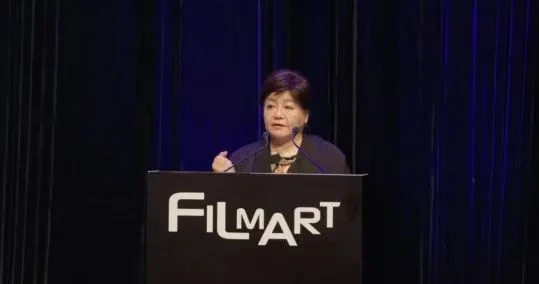
In addition to the excavation and empathy of the current collective subconscious of society, the feelings engraved in the genes of Chinese people and traditional folk legends will also arouse the resonance of Chinese people. In Professor Peggy Chiao's view, fantasy themes can be included in the category of sci-fi. For example, Chinese fantasy and Chinese sentiment-style sci-fi stories like "Chang'an San Wan Li" (Chang'an) will be a development direction for Chinese sci-fi films. Professor Chiao also mentioned the common topic of sci-fi film talent training and looked forward to promoting the Blue Planet talent training plan together.
Roundtable Forum
Peggy Chiao, Manfred Wong, Sam Ho, Yu Gang
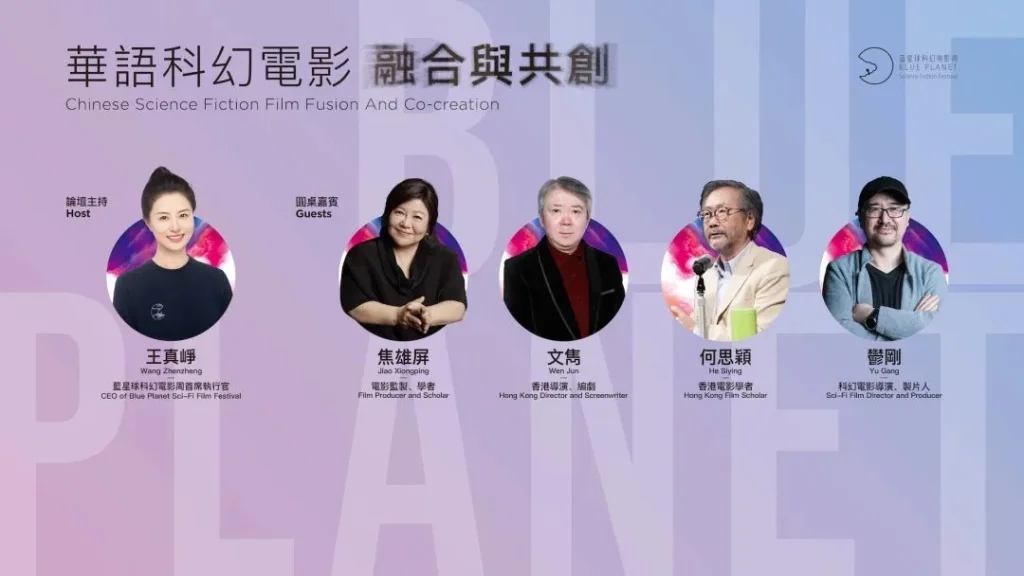
Manfred Wong / Famous Hong Kong Filmmaker, Director, Screenwriter
Manfred Wong pointed out that there are few locally created sci-fi genre films in Hong Kong, but among the two most important genres of Hong Kong films, comedy and action films, some will have sci-fi elements, such as the 1983 film "Starry is the Night" (Wait, 1983 film title check: "Twinkle Twinkle Little Star" usually associated with spaceship comedy, actually likely referring to "Starry is the Night" or "Twinkle Twinkle Little Star" - Starry is the Night is 1988. Twinkle Twinkle Little Star is 1983, directed by Alex Cheung. Manfred Wong wrote for it? Let's assume the text refers to Twinkle Twinkle Little Star (星際鈍胎). Confirmed title: "Twinkle Twinkle Little Star"). In the 70s and 80s, Hong Kong films' perception of sci-fi films came more from Hollywood. The film "Warriors of Future" produced by Louis Koo and released in 2022, although the box office did not meet expectations, was indeed a major breakthrough in Hong Kong sci-fi genre films. He suggested that the main reasons for the scarcity of Hong Kong sci-fi films are, firstly, high shooting costs and low market confidence, and secondly, the educational environment of traditional Chinese culture makes it difficult to cultivate creative talents with imagination.
Sam Ho / Hong Kong Film Scholar, Film Critic
Sam Ho proposed that the creation of Chinese sci-fi films has a major advantage: our cosmology is originally interlaced in time and space, which can be combined with traditional Chinese culture. For example, art martial arts films that have been verified by the market, from "Crouching Tiger, Hidden Dragon" to "Chang'an", have successfully added elements of art films to martial arts films. Compared with Hollywood-style commercial sci-fi films, Chinese sci-fi films can fully combine "Literary + Martial Arts", be more humanistic, and better display our cultural soft power. Therefore, when creating in the sci-fi field, we can use our own cultural heritage to explore new paths.
Yu Gang / Sci-Fi Film Director, Producer
Yu Gang combined his creative mental journey in recent years and talked about how the cosmology of Chinese sci-fi films can be completely rooted in traditional Chinese culture. We have a large number of logic-based theoretical systems that can be closed-looped, such as I Ching, Buddhism, etc. Localized expression of sci-fi can allow the audience to quickly resonate, which is also the direction of his current project creation. In addition, combined with the recently hit TV series "Blossoms Shanghai", Yu Gang believes that mother-tongue sci-fi films are also a market with great potential.
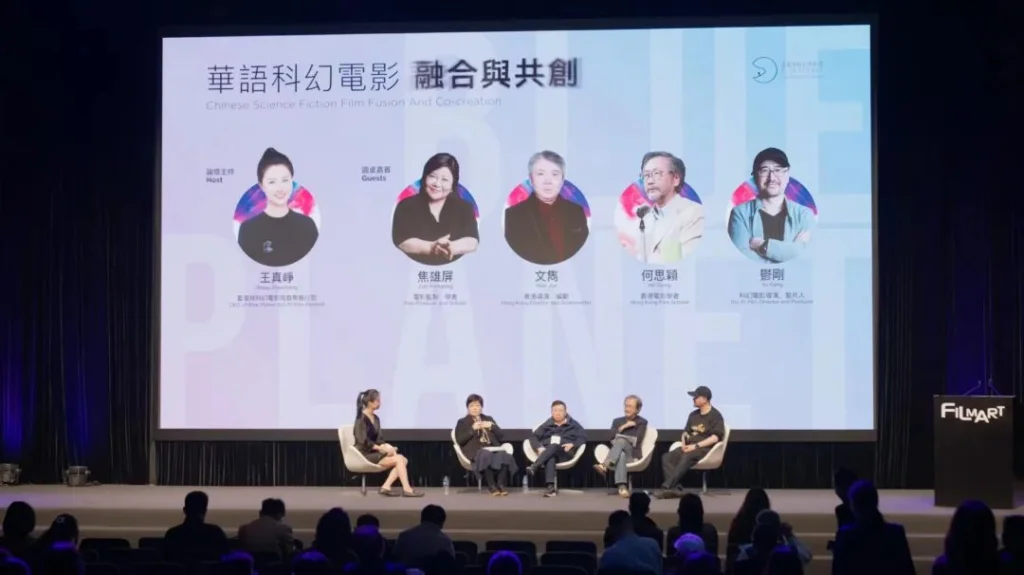
Finally, Wang Zhenzheng, Chief Operating Officer of the Blue Planet Science Fiction Film Festival, proposed taking today as a starting point for filmmakers from the Cross-Straits and Hong Kong to carry out normalized exchanges and cooperation on topics such as sci-fi film creation, film and television technology, and talent training, innovate together, and face the entire international market with a unified posture of Chinese sci-fi films.