
Professor William Wong Kam-fai, Associate Dean of the Faculty of Engineering of the Chinese University of Hong Kong, wrote an article in "Sing Tao Daily" to express his views on the government's establishment of the Science subject in primary schools. He believes that the government should refer to the experience of the Mainland, include Science in basic education at all stages along with Chinese and Mathematics, introduce university scholars to assist in curriculum planning and textbook compilation, and nurture more outstanding science teachers. At the same time, it should cooperate with teaching forms focusing on vividness, flexibility, and practice to cultivate future pillars of innovation and technology.
The original text is as follows:
In July this year, I proposed a member's motion in the Legislative Council, suggesting that the government optimize innovation and technology education, establish a complete and coherent innovation and technology curriculum framework, and integrate innovation and technology elements into the curriculum of all grades, so as to lay a good foundation for young people to devote themselves to the future society led by innovation and technology. This year's "Policy Address" took the lead in announcing the establishment of Science subject in primary schools. I welcome the government's adoption of my opinions and expect the government to further improve the science education system based on inquiry and practice in primary and secondary schools on this basis, improve students' problem-solving abilities, and develop students' scientific literacy.
Establishing Innovation and Technology Education Centers for Assistance
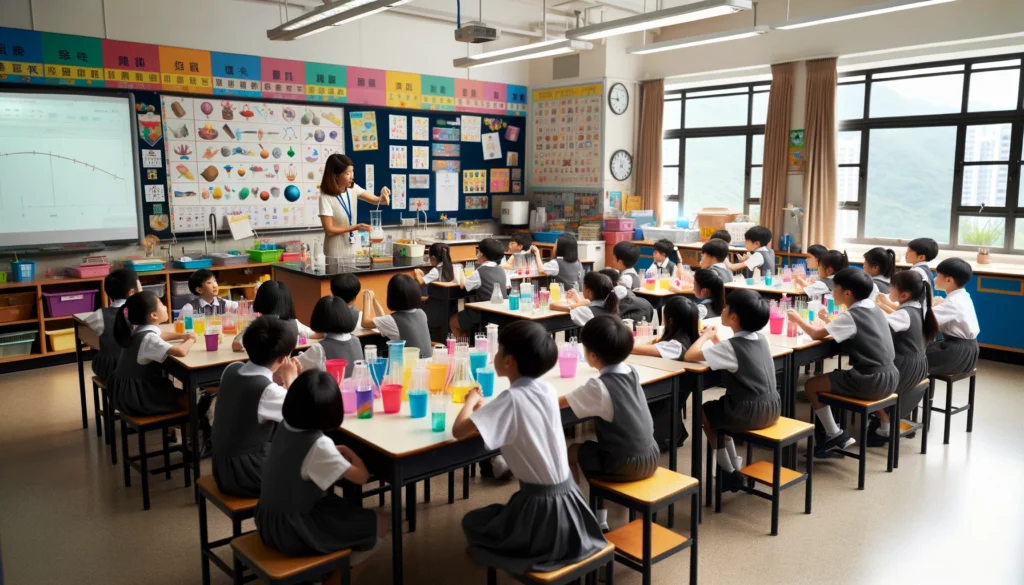
To complement the promotion of the Science subject, the government will provide a one-off grant of $350,000 to each aided primary school for purchasing teaching resources, upgrading facilities and equipment, and supporting professional development of teachers. However, having only the start-up cost is not enough. Technology changes with each passing day. Regular uses such as equipment optimization and purchase of required teaching materials also involve considerable expenses. Therefore, the government should also consider providing sufficient funds for the Science subject every year to ensure that equipment and teaching materials are not outdated. At the same time, primary school Science subjects should be equipped with laboratory administrators or teaching assistants to assist teachers in preparing equipment required for scientific activities and assisting students in conducting inquiry practices.
However, in addition to providing subsidies to each school and having schools prepare Science subject teaching materials on their own, the government can also refer to the suggestion I made in the motion, which is to set up Innovation and Technology Education Centers (ITECs) in various districts to undertake the work of supporting science education in schools in the same district. The purpose of setting up ITECs is to supplement the deficiencies of schools and provide some practical activities that require more specialized equipment and guidance from professional tutors. Students can go to ITECs for classes, or the centers can provide outreach teaching services to schools, breaking through the limitations of schools in venues, facilities, teachers, and teaching strategies. The government can also concentrate resources and relieve schools and teachers of their worries about manpower and resources. In fact, there are similar practices in the Mainland. In Deqing, Zhejiang, primary and secondary schools are set up in a unified manner, moving science classrooms to science and technology museums to form a curriculum plan. There is no need for each school to set up practice venues and teaching materials on its own, utilizing resources more effectively.
In addition to venues, equipment, and resources, the establishment of Science subject in primary schools also faces the problem of teachers' qualifications. Since 1996, Hong Kong primary schools have combined Social Studies, Science, and Health Education into General Studies. The primary school teacher degree courses of the Education University also only have General Studies. Currently, many primary schools may not have teachers who have studied science or technology degrees at universities. There may be a transition period in the future where teachers teaching primary school Science do not have a background in science or technology subjects. To cope with this situation, the authorities will set up teacher training bases for primary school Science teachers and prospective panel heads or level coordinators. Teachers can obtain corresponding certificates after attending 15 hours or 30 hours of training. In addition, teaching resources and online learning platforms will also be launched starting from this school year. However, the development of innovation and technology changes with each passing day. In addition to arranging for teachers to attend 15 or 30 hours of training, continuous education is also needed to keep abreast of new scientific knowledge. Since the authorities have set up teacher training bases, they can consider providing in-service training for in-service teachers every year and extending the above training to include teaching assistants.
Arranging Teachers to Participate in Training and Further Studies
In addition, the training format should be flexible and diversified, especially linking with universities. In May this year, eighteen departments including the Ministry of Education jointly issued the "Opinions on Strengthening Science Education in Primary and Secondary Schools in the New Era", clearly establishing a social collaborative support mechanism, integrating science education resources such as universities, research institutes, and science and technology museums, and comprehensively, systematically, and continuously promoting the high-quality development of science education in primary and secondary schools. Various provinces and cities have adopted different forms of links to cultivate Science subject teachers. For example, in Hubei, academicians of the Chinese Academy of Sciences taught hundreds of science teachers; in Chongqing, science teachers from primary and secondary schools in Tibet and Sichuan were invited to exchange opinions with university teachers through classroom restoration. These exchange forms are very worth referring to. If the government adopts my opinion to set up ITECs, training and exchange activities can also be held regularly in ITECs in various districts.
Since the 18th National Congress, the Mainland has worked hard to strengthen science education in primary and secondary schools. Science education has been included in all stages of basic education and has become a basic course as important as Chinese and Mathematics. In curriculum and textbook compilation, first-class scientists such as academicians have been introduced to participate to strengthen the integration of science and education knowledge; at the same time, teacher construction has also been strengthened. The "Policy Address" proposing the establishment of a new Science subject in primary schools is a good start, but next, we should refer to the country's experience to include Science in basic education at all stages along with Chinese and Mathematics, introduce university scholars to assist in curriculum planning and textbook compilation, and nurture more outstanding science teachers. At the same time, it should cooperate with teaching forms focusing on vividness, flexibility, and practice to stimulate students' curiosity, thirst for knowledge, and creativity, and cultivate future pillars of innovation and technology.
Member of the Legislative Council
Associate Dean (External Affairs), Faculty of Engineering, The Chinese University of Hong Kong
Vice President, Hong Kong Professionals and Senior Executives Association
Professor William Wong Kam-fai