
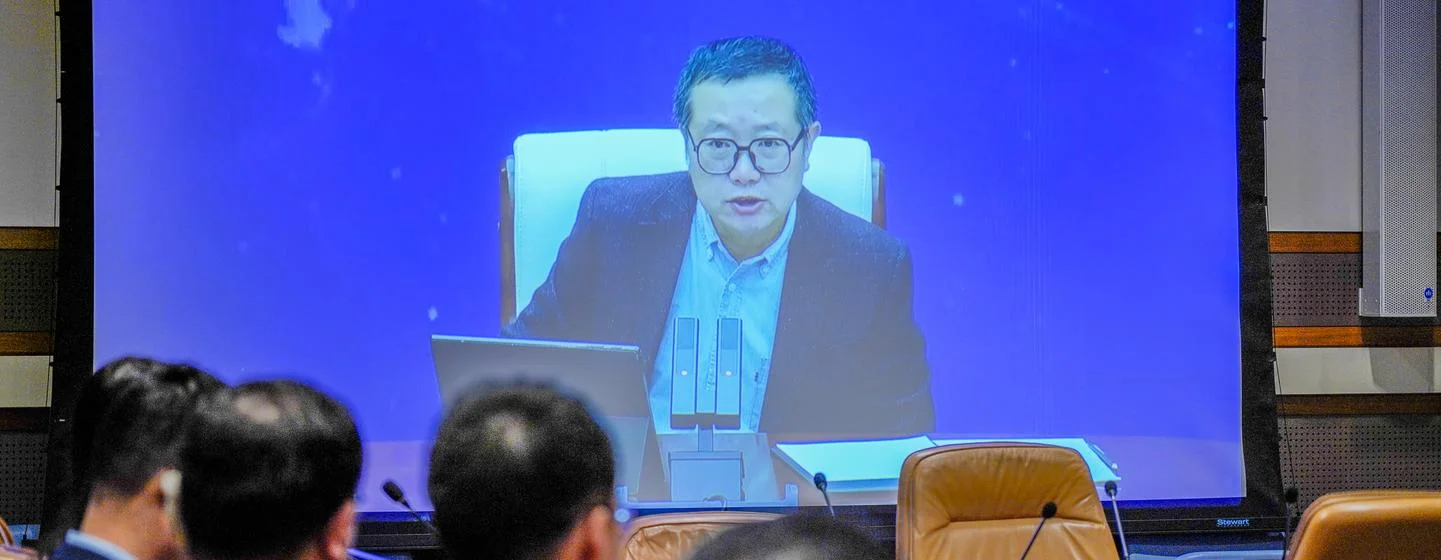
"You may all know a photo called 'Pale Blue Dot'. This may be one of the most important and famous photos in human history. It was taken by the Voyager 1 space probe launched in the 1970s from a distance of 6 billion kilometers from Earth in the early 1990s. At first glance, the whole picture is black. You have to look very carefully to find a small bright spot in this blackness... Calculated proportionally, this dim little dot placed in the universe is much smaller than a speck of dust in the Earth's atmosphere. This bright spot is Earth."
This is the opening remark delivered by Chinese sci-fi writer Liu Cixin at the "Science Fiction Literature and Sustainable Future" exchange meeting held on the United Nations Chinese Language Day on April 20 this year. He used vivid language to depict his sci-fi perspective on human development and the future.
As a recognized leading figure in the Chinese sci-fi literature circle, Liu Cixin undoubtedly projects this perspective of "looking down at Earth from space" into different works, including "The Three-Body Problem", which won the Hugo Award for Best Novel from the World Science Fiction Society in 2015, and the novella "The Wandering Earth", which has been successfully adapted to the big screen twice since 2019 and sparked phenomenal discussions.
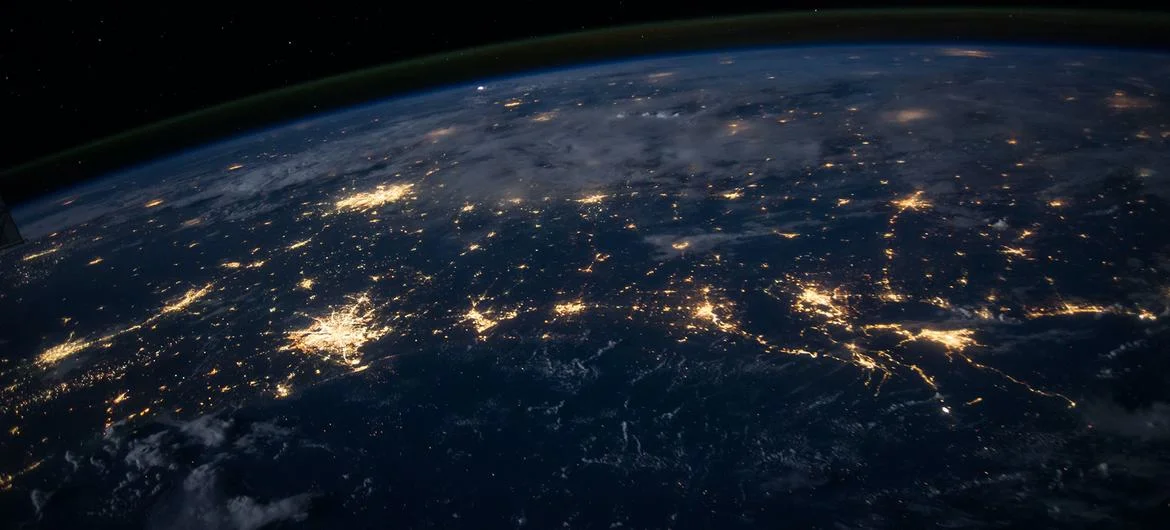
UnSplash/NASA Night view of cities on Earth seen from outer space.
Maintaining Earth's Ecological Space
Through this perspective, Liu Cixin also truly feels the insignificance of the real world. Especially for the development of civilization, "such a small world has inherent fragility and uncertainty", which in turn greatly affects the sustainable future of mankind.
Liu Cixin emphasized that the threat to development may come from development itself. The resources required for human society to fully achieve modernization will greatly exceed Earth's supply level; at the same time, Earth's constantly fluctuating biosphere may also bring catastrophic disasters to human society. All these force mankind to pay full attention to the sustainable development of Earth at present.
Liu Cixin: The foundations upon which sustainable development currently depends—environmental protection, preventing global climate change, conservation and restraint in resource extraction, and a green lifestyle based on environmental protection—are undoubtedly important. In the foreseeable future, adhering to and implementing the above concepts is the basic guarantee for the continuation of human civilization.
Stepping Out of the Cradle, Heading into Space
But looking outward from Earth, a broader path of development lies before mankind. Liu Cixin said that on the eight planets of the solar system and in the asteroid belt, resources needed for human survival and development are abundant, from water to metals, from organic matter to nuclear fusion fuel; calculating that Earth can ultimately support a population of 100 billion, the total resources in the entire solar system can support the population of 100,000 Earths.
Therefore, Liu Cixin firmly believes that, from a long-term perspective, mankind must go into space to expand its living space.
Liu Cixin: A person can only achieve sustainable growth by stepping out of the cradle. As a whole, if human civilization wants to have a truly sustainable future, it must also step out of the cradle of Earth. Otherwise, the future of mankind may be as Arthur Clarke described in the sci-fi novel "2001: A Space Odyssey": "In the midst of plenty, they slowly starved to death."
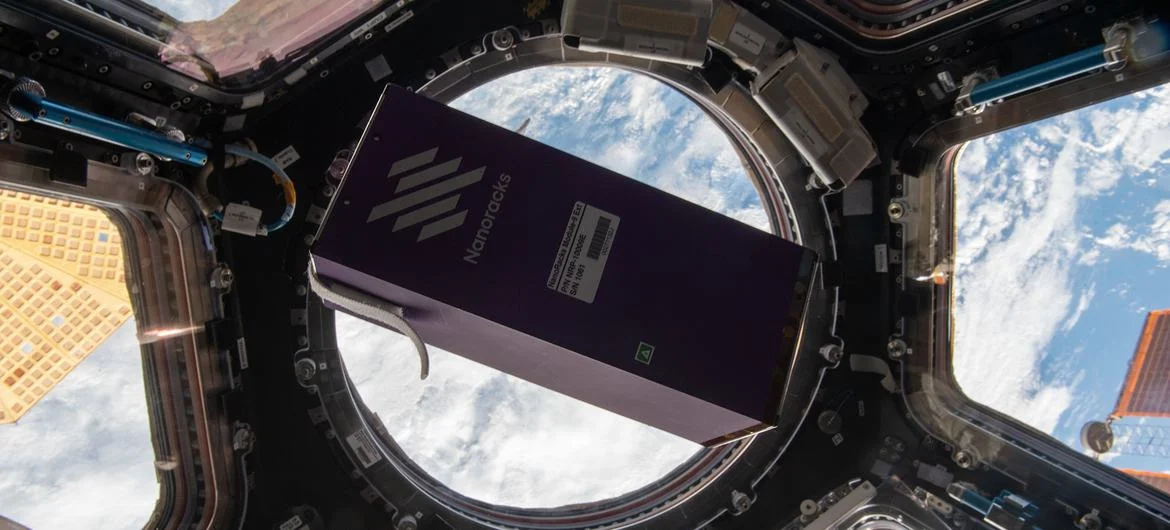
NASA Seeds from IAEA and FAO laboratories were sent into space in November 2022.
2023: The Gap Between Reality and Imagination
However, whether guarding the Earth home or embracing the stars and the sea, sustainable development in both directions is based on the continuous progress of science and technology. In this regard, Liu Cixin admitted frankly, "The reality people face is not very optimistic."
In his description, 2023 in sci-fi novels is like this: magnificent space cities are running in Earth's geosynchronous orbit, and the moon is as prosperous as Earth's suburbs; multiple human cities have been built on Mars, where millions of people live; large-scale mining is being carried out in the asteroid belt; on the frozen ocean of Io, and beyond the orbit of Neptune, there are figures of humans exploring new worlds.
The Illusion of Comprehensive and Rapid Technological Progress
He also pointed out that in the real 2023, the only thing close to the imagination of this year in sci-fi novels is the development of information technology. In the past thirty years, information technology has leaped forward at a speed far exceeding other technologies. Information networks have penetrated into all aspects of human society, comprehensively and profoundly changing people's lives.
However, Liu Cixin sharply pointed out, "It is precisely the rapid development of information technology that has covered up the slow progress in other scientific and technological fields, creating an illusion of comprehensive and rapid technological progress. If the technological progress produced by scientific development is seen as a big tree, then today, the easiest fruits to reach on this tree have all been picked."
For this reason, he emphasized, "To get a truly sustainable future, we still need more pioneering and enterprising spirit."
Liu Cixin: The international community needs longer-term development planning and needs to pay full attention to and invest in basic research and technological innovation. Many undertakings in this regard may only be completed through large-scale international cooperation, and the United Nations can undoubtedly play an important role in this regard.
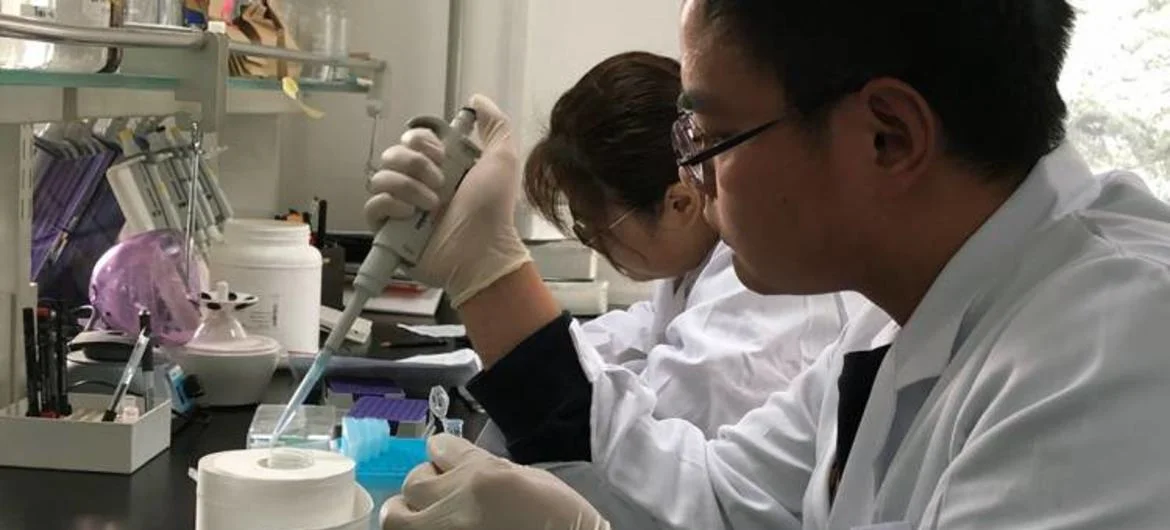
M. Gashpar/IAEA Research at the Chinese Academy of Agricultural Sciences uses nuclear technology extensively. In the photo, a laboratory technician is preparing food samples for safety testing.
Investment and Planning in Basic Science
In fact, as a specialized agency of the United Nations charged with the mission of promoting science, UNESCO is making unremitting efforts to this end. From July 2022 to July this year, UNESCO has joined hands with global partners to hold the "International Year of Basic Sciences for Sustainable Development" event, intending to highlight the importance of basic science for achieving sustainable development and improving the quality of life of people around the world.
In addition, 193 member states of UNESCO adopted the "Recommendation on Open Science" in 2021, establishing a unified vision, as well as common overall principles and values for open science. This will promote the active participation of all stakeholders, enabling scientific information, scientific data, and scientific results to be accessed more widely and used more reliably.
While affirming the many efforts made by the United Nations, Liu Cixin reiterated that even if obvious benefits from investment cannot be seen in a short period of time, people cannot ignore the fundamental role of basic scientific research in solving problems in the longer-term future.
From the perspective of a sci-fi writer, he hopes to see the establishment of a powerful mechanism similar to the Security Council at the United Nations level to further guarantee the long-term planning and execution of scientific research and space development.
The Two Sides of Artificial Intelligence Development
Liu Cixin's crisis awareness is also reflected in his keen capture of current trends. He specifically made a judgment on the recently widely concerned development of artificial intelligence: Artificial intelligence has begun to show signs of making breakthroughs, and the strong artificial intelligence of the 21st century described countless times in sci-fi novels has already shown clues.
In fact, long before this wave of generative artificial intelligence emerged, UNESCO pointed out in its latest "Science Report" released in June 2021 that the global research publications on artificial intelligence and robotics reached nearly 150,000 in 2019 alone. This field can be said to crush the research output of other interdisciplinary technologies.
With the blessing of this popularity, Liu Cixin sensed the impact of artificial intelligence on the near future of mankind from a dialectical perspective: On the one hand, the development of artificial intelligence can produce positive trends, improving the quality of human life and happiness by replacing some people in work; on the other hand, this substitutability may bring shocks to the operation of human society, especially since the current trend seems to be exactly the opposite of previous predictions—artificial intelligence may first replace jobs requiring high intelligence and high education levels, such as doctors, teachers, and stockbrokers.
He also mocked himself, saying, "This may also include us writers, who may also be replaced first."
From a more profound level, Liu Cixin is also worried that the foundation constituting human society will be significantly affected by artificial intelligence. He emphasized, "When artificial intelligence begins to intervene in scientific research and intervene in our understanding of nature and the laws of human development", human culture and art, creativity, and cognition of the world may all be redefined.
"Mankind Being Exterminated"?
So will this go to the point of "exterminating mankind"? Liu Cixin also thought about this from two levels.
First, understanding "exterminate" literally means that artificial intelligence wants to use some kind of violence to physically exterminate mankind completely or rule the world. Liu Cixin believes that given the current level and trend of technological development, this point "is not very likely in the foreseeable future"; even if artificial intelligence undergoes the rapid self-iteration predicted by some, ironically, "our human 'incompetence' becomes our last barrier" because the limited computing power that humans can provide cannot support artificial intelligence to iterate indefinitely.
What makes Liu Cixin more vigilant may be the "extermination" in the second sense. In his imagination, if human society adapts to coexistence with artificial intelligence, most people will no longer need to work, thereby ceding more and more power of social operation. This may lead mankind into an unprecedented huge trap: In the comfort zone of technology, where is the vitality and pioneering spirit of human civilization?
Liu Cixin: If this continues to develop, the final fate of mankind may be "being exterminated by artificial intelligence." But this process of "extermination" is completely within our will, and artificial intelligence has no malice from beginning to end; it just acts according to human instructions. If such a thing really happens, the degree of intelligence and computing power required by artificial intelligence is far less than the "extermination" in the true literal sense mentioned earlier. Therefore, this is indeed something we should be alert to about the future.

WMO/Boris Jordan The United Nations says climate change is triggering more extreme weather events.
Crisis Response: Division or Unity?
People familiar with Liu Cixin's works know that crisis is the basic setting he often uses in his narrative, and how all mankind unites to respond to the crisis is also the object he focuses on portraying. These plots not only deeply touch ordinary readers but also make diplomats with an international perspective feel a lot.
Geng Shuang, China's Deputy Permanent Representative to the United Nations, believes that Liu Cixin's sci-fi works "embody a thought of a shared future for mankind and solidarity, and also entrust multilateral international cooperation with a lofty and sacred responsibility and mission".
But Liu Cixin realistically sees that facing various challenges of mankind, there are still "many divisions and confrontations" in the international community, which may have deep historical reasons as well as political and economic reasons from various aspects.
At the same time, these challenges cannot be compared with the doomsday crises described in sci-fi novels. Liu Cixin explained that traditional disasters may occur in local areas, so they can receive rescue from other parts of the world; while doomsday crises will put the whole world on the brink of destruction, and external rescue simply does not exist.
He still believes that, assuming such a doomsday crisis occurs, the international community should unite, make decisions uniformly, and allocate resources.
Liu Cixin: The structure of the international community matches the natural and social environment in which it is located. The kind of comprehensive and large-scale international cooperation, international solidarity, and jointly facing crises that we now think is very difficult will of course be very difficult or even unlikely in reality. But once the entire human society faces the kind of doomsday crisis in sci-fi novels, I think mankind will still make this choice (of jointly responding to the crisis), which is also the ability of human society to make self-adjustments when facing nature.
The above is a report by Zou Heyi of UN News from the New York Headquarters.